
More Florida homeowners are turning to private wells every year. A well means independence from municipal water bills and outages. But drilling one involves permits, geology, and real decisions. This guide walks through what actually matters before you break ground.
Solar power is becoming a normal part of home life in Utah. More homeowners in Salt Lake City, Sandy, and nearby cities are switching every year. But going solar involves more than buying panels. It means understanding your roof, your utility rules, and the full installation process.
This guide walks you through what actually matters. No sales pitch. Just the real steps every Utah homeowner should know before signing anything.
Why Florida Is Actually a Good Place to Drill
Florida sits on one of the most productive aquifer systems in the country. Water is often closer to the surface than in many other states.
This means shorter drilling times in many areas. It also means lower equipment strain during the drilling process itself.
Florida’s geology is mostly sand and limestone. Limestone drills faster than harder rock types found elsewhere. That’s good news for project timelines.
Understanding Florida's Aquifer System
Before buying any charger, your panel capacity needs checking. This step gets skipped too often.
A Level 2 charger requires a dedicated 240-volt circuit. Most homes need a 40-amp or 50-amp breaker just for the charger. Older panels, or panels already near capacity, may need an upgrade first.
A licensed electrician should always confirm your panel’s available capacity. Skipping this step is the most common reason installations get delayed.
Permits and Code Compliance in Utah
Most private wells in Florida draw from the Floridan Aquifer. This aquifer runs beneath nearly the entire state.
In north and central Florida, this aquifer sits closer to the surface. Wells here are often shallower and less complex to construct.
Water quality and depth vary by exact location. A licensed driller assesses your specific property before recommending a well type.
Types of Water Wells: Which One Fits Your Property?
Not every property needs the same well design. The right choice depends on depth to water and intended use.
| Well Type | Typical Use | Key Characteristic |
|---|---|---|
| Shallow Well | Irrigation, lawn watering | Draws from surface-level water |
| Deep Well | Household drinking water | Reaches the Floridan Aquifer |
| Artesian Well | Reliable natural flow | Underground pressure pushes water up |
Explore our full breakdown of types of water wells to see how each performs. Properties with natural underground pressure may also qualify for our artesian well installations service.
Do You Need a Test Hole First?
Skipping this step is a common and avoidable mistake. A test hole confirms water exists before a full well is drilled.
This small pilot hole reveals two things. It shows the depth at which water is found. It also shows the water’s general quality and yield.
Our test holes service helps property owners sidestep this exact problem. It confirms water yield before a full well is drilled.
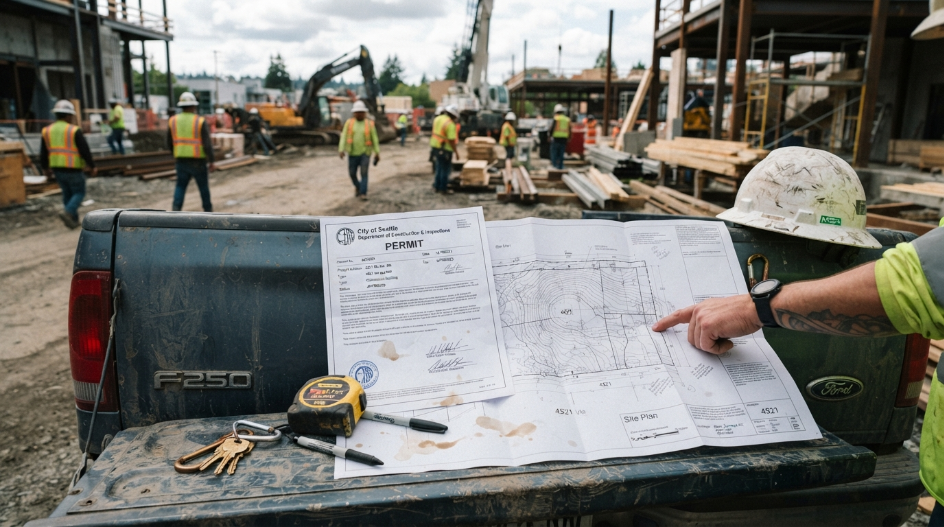
Permits: The Step Homeowners Often Underestimate
Florida requires a permit before any well construction begins. This falls under Florida Administrative Code Chapters 62-531 and 62-532. The rule applies statewide, with no exceptions for private property.
Permitting authority depends on your county. Some regions use the regional Water Management District directly. Others delegate permitting to the local county health department.
A licensed contractor typically handles this process for you. This includes submitting construction plans covering location, casing, and grouting method.
The full process, from planning to potable water, typically takes 6 to 12 weeks. Drilling itself usually takes just 1 to 3 days. Permit review is often the longest step. It can take 30 to 60 days alone.
New Wells, Deep Wells and Shallow Wells Explained
Different projects call for different installation approaches. Understanding the terms helps you ask better questions.
- New well installations start from scratch on undeveloped land
- Deep well installations reach the Floridan Aquifer for drinking water
- Shallow well installations serve irrigation and non-potable needs
- Artesian well installations rely on natural underground pressure
Our team handles new well installations from start to finish. We also complete deep well installations for drinking water needs. For irrigation, we offer shallow well installations as well.
Agricultural and Commercial Wells: A Different Scale
Farms and commercial properties often need higher-capacity systems. These wells support irrigation, livestock, or business operations at scale.
Sizing these systems correctly requires understanding water demand across peak usage periods. Undersized systems fail during the exact moments they’re needed most.
Farms across Florida rely on our agricultural well design services. Businesses instead turn to our commercial water well drilling team for larger projects.
What the Drilling Process Actually Looks Like
Every well project follows a similar sequence, regardless of size.
- Site assessment and test hole if needed
- Permit application and approval
- Drilling to the required depth
- Casing installation and grouting
- Pump installation and system activation
- Water testing and disinfection
This sequence protects both water quality and long-term well performance. Skipping steps creates problems that surface months or years later.
Water testing has also expanded in scope recently. Beyond standard bacteria checks, 2026 guidance increasingly recommends testing for PFAS and nitrates. This matters especially for properties near agricultural areas. Confirming these results early protects your household long-term.
Frequently Asked Questions
Yes. This applies under Administrative Code Chapters 62-531 and 62-532. It holds true regardless of property ownership or well size.
A shallow well draws from surface-level water and suits irrigation. A deep well reaches the Floridan Aquifer and typically supplies household drinking water.
A test hole determines this before full drilling begins. It reveals both depth to water and general water yield.
An artesian well relies on natural underground pressure. This pressure pushes water toward the surface on its own. It often reduces the need for constant pumping.
Most projects take 6 to 12 weeks overall. Drilling itself is quick, often just 1 to 3 days. Permit review, however, can take 30 to 60 days.