
If you’ve been researching ways to improve your home’s water quality, you’ve likely come across two popular options: water softeners and water filters. While they sound similar, they actually solve different problems. Many homeowners wonder: Do I need a water softener, a water filter, or both?
This guide breaks down the differences, costs, and benefits of each so you can make the right choice for your household.
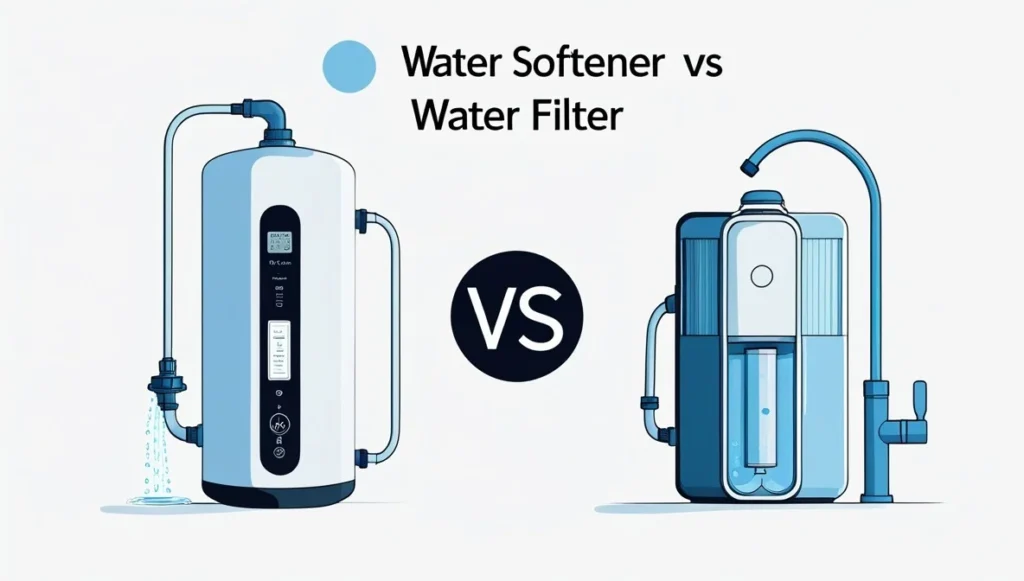
Water Softener vs Water Filter: The Core Difference
| Feature | Water Softener | Water Filter |
| Main Purpose | Reduces hardness (calcium & magnesium) | Removes contaminants (chemicals, toxins) |
| Improves Taste | No | Yes |
| Protects Plumbing & Appliances | Yes | Limited (depends on system type) |
| Health Benefits | Indirect (protects appliances) | Direct (safer, cleaner drinking water) |
| Best For | Homes with scale buildup, hard water | Homes with safe but poor-tasting or contaminated water |
What Is a Water Softener?

A water softener is designed to treat hard water—water with high levels of minerals like calcium and magnesium.
Key Benefits:
- Prevents scale buildup in pipes, faucets, and appliances.
- Extends the life of dishwashers, washing machines, and water heaters.
- Reduces soap scum and improves cleaning efficiency.
- Leaves skin and hair feeling softer.
What It Doesn’t Do:
- A water softener doesn’t remove contaminants like chlorine, bacteria, or pesticides. Its job is strictly to address hardness.
What Is a Water Filter?

A water filter targets contaminants, improving the taste, odor, and safety of your drinking water.
Key Benefits:
- Removes chlorine, sediment, pesticides, heavy metals, and other harmful substances.
- Provides cleaner, better-tasting drinking water.
- Can protect your health by reducing exposure to toxins.
- Available in whole-house systems or smaller under-sink/point-of-use options.
What It Doesn’t Do:
- A standard water filter doesn’t soften water or prevent scale buildup caused by hardness.
Do You Need a Water Softener, a Filter, or Both?
- Choose a water softener if:
- You see scale on faucets, dishes, or shower doors.
- Your appliances wear out faster due to mineral buildup.
- Your skin and hair feel dry after showers.
- Choose a water filter if:
- Your water smells or tastes bad.
- You’re concerned about chlorine, lead, or other contaminants.
- You want healthier drinking water.
- Choose both if:
- You rely on a private well with high minerals and potential contaminants.
- You want the best protection for both your plumbing and your health.
- You’re investing in long-term water quality for your family.
Cost Comparison
- Water Softeners: $1,200 – $3,000 installed (depending on size and features).
- Water Filters: $800 – $2,500 for whole-house filters; $200 – $600 for under-sink systems.
- Combination Systems: $2,500 – $5,000 for homes needing both hardness reduction and contaminant removal.
Long-Term Value
Investing in the right system doesn’t just improve your water—it saves money:
- A softener can extend appliance life by years, reducing costly replacements.
- A filter ensures your family has safe, clean drinking water, cutting down bottled water purchases.
- Combination systems offer complete peace of mind, especially for well water users.
Why Work with Advanced Well Drilling & Water Solutions LLC?
Every home’s water is different. That’s why we start with a professional water test to identify hardness levels, contaminants, and overall water quality. From there, our team recommends the most cost-effective water treatment solution, whether it’s a water softener, a filter, or both.
With expert water filter installation and ongoing support, you’ll know your water system is built to last.
Conclusion
When it comes to water softener vs water filter, there’s no one-size-fits-all answer. Softeners tackle hardness, while filters target contaminants. Many homeowners benefit from combining the two for the cleanest, safest, and most efficient water possible.
👉 Ready to find out which system is right for your home? Contact Advanced Well Drilling & Water Solutions LLC today for a free consultation and water quality test.
FAQs About Water Softeners vs. Water Filters
Can a water softener make my water safe to drink?
No. A softener only removes hardness minerals—it doesn’t remove harmful contaminants.
Do water filters reduce hardness?
Not typically. Most filters remove chemicals and impurities, not calcium and magnesium.
Is it expensive to maintain these systems?
Softener maintenance costs about $100–$200 per year, mainly for salt. Filters need cartridge replacements, usually $50–$200 annually.
How do I know which system I need?
Start with a water test. It reveals if your water’s main issue is hardness, contamination, or both—so you can invest wisely.